
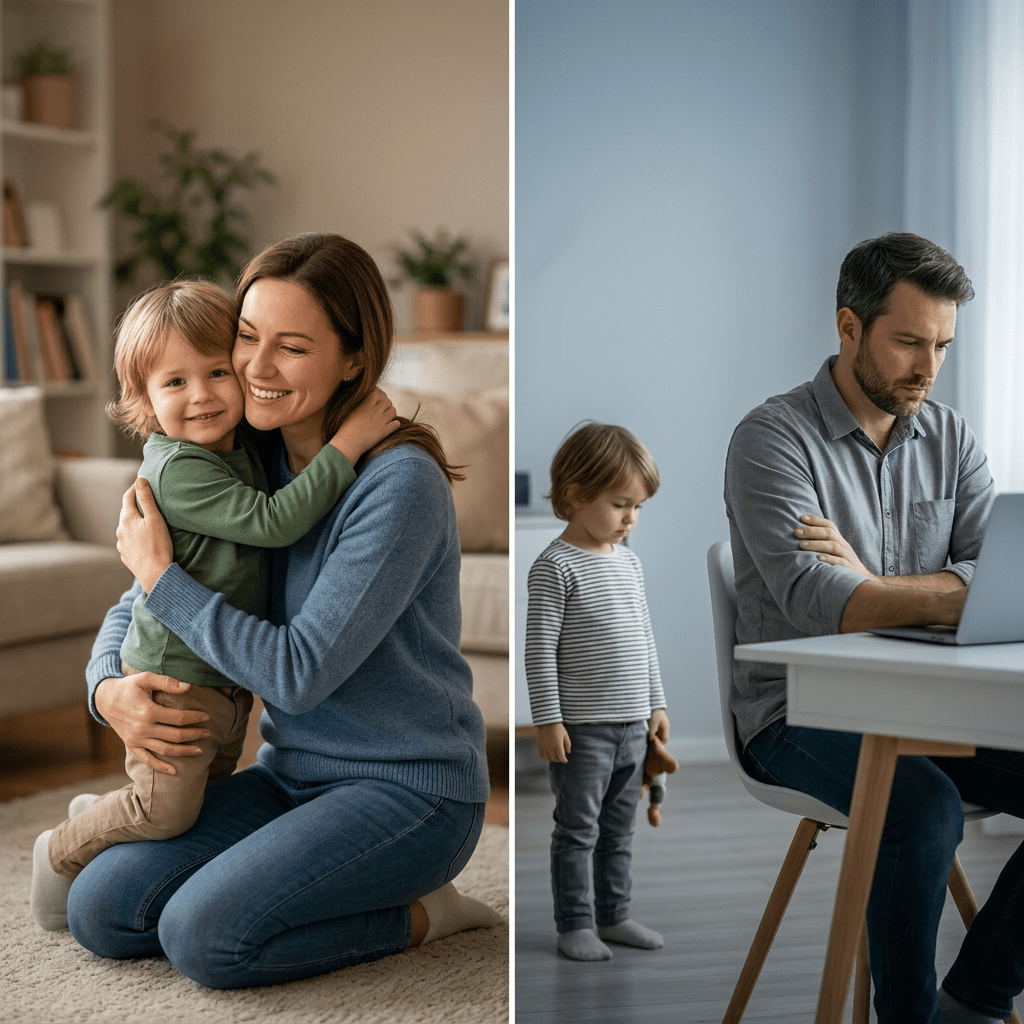
Parents have a major influence on what type of attachment style that their child grows up with. The overall most beneficial attachment style would be secure attachment. In order for a child to develop this, they need to be provided a consistent and emotionally supportive environment. Parents that support what their child needs and are emotionally stable and available are creating trust and comfort for their child. This can affect how the child experiences things throughout their life. Knowing that they have a stable support system can allow them to feel more comfortable and confident exploring opportunities later on. Secure attachment styles build confidence, emotional regulations skills, and positive relationships. They can also influence behavior as the child may be more open to express their feelings and seeks help from others when needed. A strong support system can even lead to better academics as the child feels secure enough to focus on education. Parents that validate their child, are attentive, and responsive to needs are able to create this environment for their child. This can be long term or may look like spending time with your child everyday doing things they enjoy while being encouraging and interactive. Overall, secure attachment styles benefit relationships and long term outcomes.
On the other hand, parents have the possibility of creating a disorganized or fearful avoidant attachment style within their child. This can be caused by growing up in an unorganized, inconsistent, and confusing environment. Since parents are meant to be a source of comfort and security, this can lead to many mixed emotions and even finding comfort within stress and uncertainty. Not having this comfort can have an impact on behavior as well. They will not have a proper understanding of how to respond in relationships, looking for closeness, yet drawing away when they sense it due to fear and anxiety. It will also be hard for the child to gain trust and regulate their emotions since it was not displayed by their parents. Looking at the long term effects, disorganized attachment styles can impact confidence levels, and even social and academic performances. Parents can recognize these patterns, even if they happen unintentionally, and make an effort to give their child a more supportive and consistent space to grow up in.
When looking at these two attachment styles, it is clear that one can significantly benefit a child’s development. This would be the secure attachment style. Safety, comfort, and consistency are all key factors for development that are not enforced with a disorganized or fearful avoidant attachment style. Having a secure attachment style can support the child later in life by showing them healthy behaviors, learning styles, and relationships that they carry with them. Unlike this, fearful avoidant attachment styles display emotional challenges, insecurities, and confusion. It is important that parents understand the differences in these attachment styles and effects that they are having on their child. One of the most important factors is providing the child with someone they can rely on, feel safe around, and trust. The child will pick up these traits, carrying them on through their life. Parents can achieve this by being responsive, empathetic, and consistent towards their child. When children have this emotional strength and confidence, they are far more likely to succeed and thrive later on.
 Life of Lila